

At
the
bargain
price
of
a
measly
£7,
I
snapped
up
Sly
Cooper
and
the
Thievius
Raccoonus
on
the
PlayStation
Network
because
it
was
a
series
I
missed
out
on
back
in
the
PlayStation
2
days.
It
turned
out
to
be
the
perfect
decision
because
Sly
Cooper
is
a
jump
back
to
a
simpler
time
of
action-platforming,
a
firm
kick
in
my
dangling
nostalgia-balls
that
has
sent
the
searing
hot
memories
of
times
forgotten
up
through
my
body
and
into
my
brain.
Note:
Sly
Cooper
and
the
Thievius
Raccoonus
was
also
called
Sly
Racoon
in
PAL
regions,
such
as
here
in
the
UK.
A
tad
confusing,
yes.
For
clarity,
I’m
just
going
to
refer
to
it
as
Sly
Cooper
and
the
Thievius
Raccoonus
as
that
is
what
the
majority
reading
this
are
used
to.
For
context,
Sly
Coooper
is
one
of
three
PlayStation
2
titles
that
represent
Sony’s
latest
attempt
at
emulating
classic
games
from
the
PS2
era.
The
first
batch
on
modern
hardware
included
the
likes
of
the
Jak
&
Daxter
series
but
the
emulation
was
heavily
flawed
and
the
problems
became
worse
when
the
PS5
released,
seemingly
because
the
emulator
wasn’t
designed
with
the
PS5’s
architecture
in
mind.
Available
On:
PS2,
PS4,
PS5
Reviewed
on:
PS5
(via
emulation)
Developer:
Sucker
Punch,
Implicit
Conversions
Publisher:
Sony
But
for
a
breakdown
of
the
actual
emulation
performance
you
can
scroll
further
down
the
page.
For
now,
I’d
like
to
toss
compliments
in
Sly’s
direction
so
that
he
can
store
them
for
the
cold
hard
winter
ahead…no,
wait.
That’s
squirrels.
I’m
thinking
of
squirrels.
So
he
can
sneak
them
out
of
the
rubbish
bin
like
the
trash
panda
that
he
is?
Yeah.
That’ll
do
it.
Sly
is,
as
the
name
of
the
game
suggests,
a
racoon.
He’s
also
a
walking,
talking
stereotype
because
like
all
racoons
he’s
a
thieving
little
bastard.
Sly’s
family
has
a
long
and
noble
history
of
pulling
off
daring
heists
on
other
thieves.
That
legacy
meets
a
tragic
end
when
Sly’s
father
is
murdered
at
the
talons
of
Clockwerk
and
his
cronies,
who
together
form
the
Fiendish
Five.
Revenge
drives
Sly,
as
does
a
desire
to
retrieve
the
Thievius
Raccoonus,
a
book
containing
the
knowledge
and
skills
of
the
entire
Cooper
family
lineage
which
was
stolen
by
the
Fiendish
Five.
Sly
is
voiced
by
Kevin
Miller
who
portrays
the
character
brilliantly,
giving
the
thief
a
roguish
charm
and
a
cool,
calm
and
collected
exterior
that
hides
his
grief.
That
said,
I
do
think
the
script
lets
him
down
a
touch
because
he
never
gets
the
chance
to
unleash
a
truly
angry
Sly
Cooper.
That’s
because
the
game
almost
puts
more
emphasis
on
Sly
recovering
his
family’s
stolen
property
than
on
the
murder
of
Sly’s
father.
Even
when
Sly
confronts
the
big
baddie
himself,
the
emotional
weight
isn’t
allowed
to
break
through
and
smash
you
in
the
chest
like
it
needs
to.
With
smarter
writing,
Sly’s
slick
persona
could
have
cracked
to
reveal
the
anger
lurking
beneath,
especially
in
the
final
stages
of
the
game.
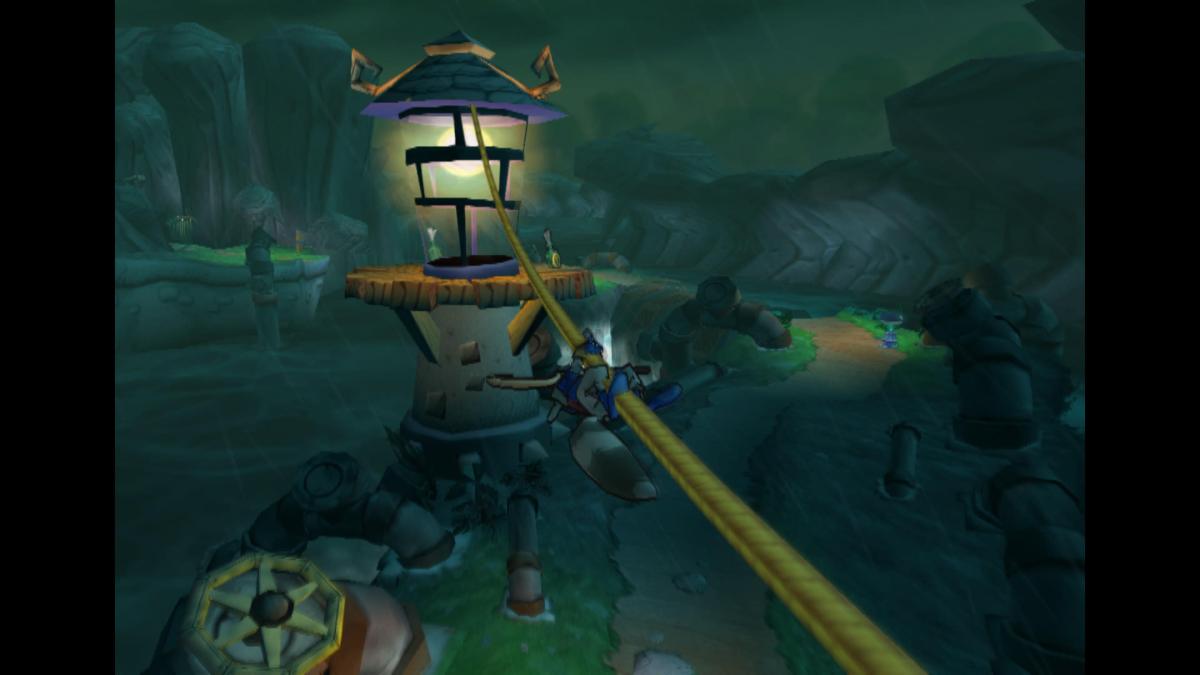
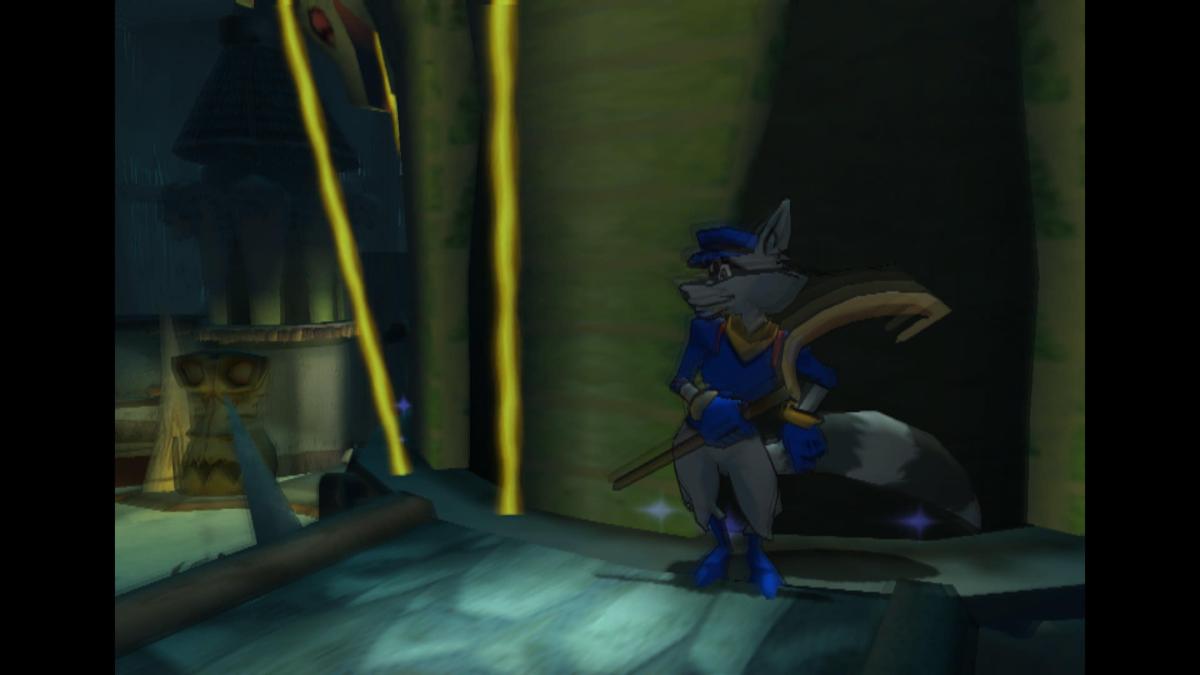
the
game
makes
heavy
use
of
motion
blur,
making
it
tricky
to
get
screenshots
that
don’t
have
Sly
standing
perfectly
still.
Sorry
about
that!
But
the
story
and
writing
don’t
lack
a
sense
of
easy-going
fun
and
charm.
Sly
is
cut
from
the
same
(probably
stolen)
cloth
as
classic
character
like
Han
Solo,
a
rogue
with
a
good
heart
and
enough
smugness
to
power
a
small
town.
He’s
got
a
couple
of
plucky
companions
along
for
the
ride,
too;
Bently,
the
technical
wiz
of
the
operation
who
isn’t
a
fine
of
germs
or
getting
his
hands
dirty;
and
Murray,
the
gangs
getaway
driver
and
resident
goofball.
They
are
quirky,
fun
companions
which
is
why
its
a
shame
they
don’t
get
much
screentime,
a
complaint
that’s
even
more
true
of
Sly’s
love
interest
Inspector
Carmelita
Montoya
Fox.
But
from
what
I’ve
read,
this
lack
of
character
development
gets
fixed
in
the
sequels.
While
the
game
kind
of
pitches
itself
as
a
stealthy
adventure,
you
don’t
actually
do
a
whole
lot
of
sneaking.
Sly
is
a
dab
hand
with
his
handy
cane,
usually
managing
to
knock
out
foes
with
a
single
blow.
That’s
good
because
he’s
not
the
most
durable
mammal
in
the
land,
only
able
to
soak
up
one
hit
before
losing
a
life.
Baddies
usually
have
a
singular
attack
they
employ
like
a
leaping
body
slam
or
hurling
a
shuriken
at
Sly’s
face,
so
you
jump
or
sidestep
that
and
then
introduce
them
to
the
weighty
of
a
hefty
wooden
pole.
Platforming
is
equally
straightforward
and
just
as
fun.
A
simple
jump
is
all
Sly
has
to
rely
on
for
the
most
part,
and,
of
course,
the
questionable
timing
and
skills
of
the
player.
By
pressing
the
circle
you
can
also
get
Sly
to
inch
across
narrow
platforms,
land
atop
poles
and
swing
on
hooks,
although
I
did
find
the
game
weirdly
unresponsive
at
times.
I’m
not
sure
if
this
is
an
issue
that
was
present
in
the
original
version
of
the
game,
but
sometimes
pressing
circle
wouldn’t
register,
sending
Sly
plummeting
to
his
death.
Sorry,
Sly.
That
small
control
issue
aside,
the
game
is
a
pleasure
to
play.
While
it’s
far
from
the
more
complex
games
of
today,
I
basked
in
the
simplicity
of
Sly
Cooper’s
mixture
of
platforming
and
combat
through
its
linear
levels.
There’s
a
pleasing
cadence
to
the
action
that
stems
from
its
linearity
–
you’re
always
moving
forward
at
a
brisk
pace
all
while
seeking
out
clues
to
uncover
the
combination
to
vaults
which
unlock
new
skills.
There’s
a
pretty
simple
structure
to
the
game
as
well:
you
enter
a
new
zone,
battle
through
the
introductory
mission
that
sets
up
the
general
theme,
like
a
casino
or
swamp,
and
then
get
dumped
into
a
small
hub
that
hosts
several
missions.
To
progress
to
that
zones
big
boss
battle
you’ll
need
to
play
through
each
mission,
snag
the
treasure
keys
and
use
them
to
progress.
Sure,
the
structure
is
a
little
repetitive,
but
it
works
nicely
in
the
context
of
the
5
or
6
hours
it
takes
to
complete.
Plus,
the
game
does
a
good
job
of
throwing
in
some
new
gameplay
from
time
to
time,
like
clumsy
racing
sections
or
vehicle
based
levels,
or
maybe
a
new
enemy
type.
Above
all
else,
like
a
good
thief
it
doesn’t
hang
around
long
enough
to
overstay
its
welcome,
so
by
the
time
the
gameplay
is
wearing
thin
the
credits
are
rolling
and
Sly
is
sneaking
out
the
back
with
your
valuables
in
a
sack.
The
Emulator
What
we’ve
got
is
the
game’s
native
resolution
of
480p
upscaled
by
the
emulator
to
what
appears
to
be
1080i.
Otherwise,
the
image
is
untouched
and
presented
in
the
classic
4:3
ratio,
meaning
you’ll
have
massive
black
bars
on
either
side
of
the
screen.
In
other
words,
this
is
pretty
much
a
1-to-1
recreation
of
what
playing
Sly
Racoon
in
the
early
2000s
would
have
been
like,
at
least
graphically.
And
without
the
chunky
TV
that
required
a
freaking
body-builder
to
move
around.
The
other
point
of
comparison,
aside
from
the
original
game,
is
the
PS3
remastered
versions
of
the
first
three
games.
That
package
took
the
original
game
and
enhanced
it
with
improved
textures
and
a
native
720p.
It
also
included
widescreen
support.
I
don’t
have
a
PS3
handy
to
test
that
collection
out
though,
so
all
I
can
do
is
go
various
videos
available
on
Youtube
that
attempt
to
provide
a
side-by-side
look.
The
other
option
is
to
stream
the
PS3
package
via
PlayStation
Premium,
but
PS3
streaming
is
notoriously
shite
and
wouldn’t
give
a
very
fair
comparison.
Overall,
it’s
difficult
to
choose
one
or
the
other:
this
new,
emulated
version
looks
a
tad
sharper
because
of
the
upscaling,
but
the
improved
textures
of
the
remaster
look
great.
Of
course,
it’s
a
moot
point
really
because
outside
of
streaming
it
the
remastered
collection
isn’t
readily
available.
The
biggest
benefit
the
emulator
offered,
in
my
experience,
was
being
able
to
rebind
all
of
the
game’s
controls.
Being
of
the
older
persuasion,
Sly
Cooper
has
a
few
control
issues,
the
kind
I
hear
effect
racoons
of
a
certain
age
and….where
the
fuck
am
I
going
with
this
metaphor?
The
point
is,
the
camera
controls
on
the
right
stick
are
inverted
by
default,
meaning
if
you
push
the
stick
left
the
camera
moves
right
and
vice
versa.
There’s
no
way
to
change
this
is
the
game
and
while
I
could
adapt
to
the
original
control
scheme,
that
would
take
actual
effort.
Thankfully
the
emulator
allows
for
rebinding
the
controls,
so
within
a
few
seconds
the
camera
was
swapped
around.
The
second
biggest
positive
of
the
emulator
was
the
ability
to
rewind.
It’s
a
very
cool
feature
that
pops
up
with
a
tap
of
a
button,
letting
you
jump
backwards
in
time
by
five
second
increments
.
It’s
instantaneous,
too,
and
lets
you
go
remarkably
far
back.
I
reckon
you
can
rewind
up
to
about
five
minutes.
In
a
platformer
like
this
where
a
single
hit
or
slip-up
costs
a
life
and
could
send
you
back
to
the
start
of
the
stage,
being
able
to
quickly
leap
backwards
in
time
is
awesome!
The
emulator
also
boasts
a
save/load
feature
that
you
can
bring
up
at
any
time.
And
I
do
mean
any
time.
In
the
middle
of
cutscenes,
loading
screens
–
anything,
really.
Finally,
there
are
some
useless
visual
presets
that
simply
add
a
filter
to
the
image,
like
a
grainy
arcade
setting.
I
didn’t
use
these
and
I
can’t
imagine
anyone
will.
There
is
the
choice
to
turn
off
“Enhancements”,
a
slightly
peculiar
option
as
it
doesn’t
explain
what
these
enhancements
are.
Naturally,
like
me,
you
might
assume
enhancements
refer
to
graphical
upgrades,
but
that’s
not
the
case.
It
turns
out
the
enhancements
in
question
is
the
rewind
feature
That
begs
the
question,
why
turn
them
off?
After
all,
they
don’t
impact
the
game
in
any
way
until
you
choose
to
use
them.
Well,
it
turns
out
they
might.
The
PS4
version
has
the
enhancements
turned
off
by
default,
a
tacit
nod
to
the
fact
that
they
can
cause
some
performance
woes
on
the
older
machine.
The
rewind
feature
uses
a
lot
of
system
memory
in
order
to
keep
all
those
game
states
available,
something
which
the
PS4
seems
to
struggle
with.
People
have
reported
lower
framerates
with
the
features
enabled,
as
well
as
the
game
being
more
prone
to
crashing
when
the
replay
feature
is
heavily
used.
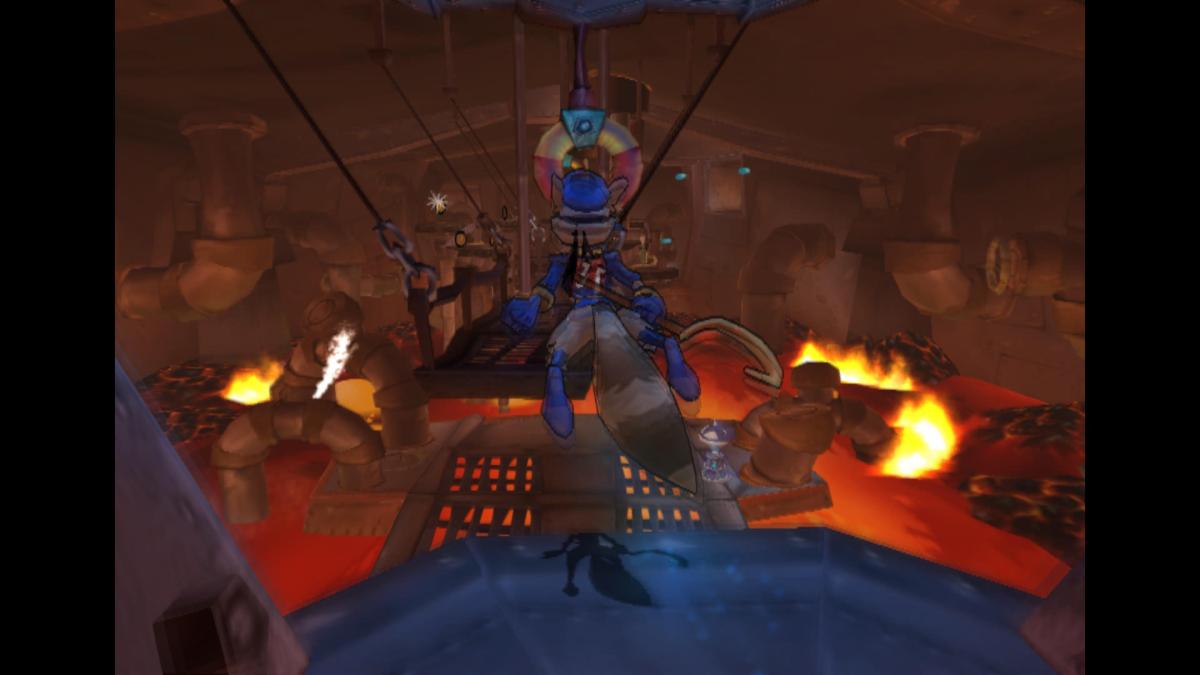
That’s
not
the
only
issue
with
the
PS4
version
of
the
emulation,
either:
the
gameplay
runs
slightly
faster
than
it
should,
giving
it
a
slightly
feel
and
also
resulting
in
the
audio
becoming
desynced.
This
is
especially
problematic
on
one
specific
boss
built
around
timing
button
presses
to
the
music,
although
it’s
still
possible
to
get
through
it.
The
good
news
is
that
the
company
behind
the
emulator
are
aware
of
these
issues
and
are
actively
working
on
them.
Hopefully
they’ll
be
fixed
soon.
Finally,
we
have
to
talk
about
those
super
shiny
PlayStation
Trophies!
For
this
release,
a
brand
new
Trophy
list
has
been
drawn
up,
including
that
all-important
Platinum.
The
new
list
is
different
to
the
one
found
in
the
PS3
remasters,
being
notably
tougher.
It
includes
level-specific
challenges
that
are
quite
fun,
as
well
as
having
to
open
all
the
vaults
and
completing
at
least
ten
of
the
timed
runs.
It
isn’t
going
to
tax
you
too
much,
but
the
list
is
quite
fun,
encourages
some
messing
about
and
is
decently
challenging.
In
Conclusion…
With
so
many
new
games
piling
up
on
my
backlog
its
starting
to
become
a
real
health
and
safety
hazard,
and
choosing
to
jump
into
a
PS2
classic
sure
isn’t
going
to
help
me
keep
up.
But
it
was
the
right
choice.
Sly
Cooper
and
the
Thievius
Raccoonus
is
a
classic
for
a
reason,
and
finally
getting
to
experience
it
was
a
joy.
Clearly,
this
newly
emulated
version
has
a
couple
of
flaws
that
need
to
be
worked
out,
although
my
own
personal
experience
was
flawless
aside
from
a
single
crash.
The
game
itself
has
held
up
well
over
the
years.
It’s
extremely
charming,
telling
a
fun
story
that
supports
simple
yet
entertaining
platforming
action.
So
far
it
seems
this
newly
emulated
release
of
Sly
Cooper
has
done
very
well
indeed,
meaning
it’s
probably
safe
to
bet
that
the
rest
of
the
trilogy
will
make
its
way
onto
PSN.
But
the
real
question
is
whether
we
could
Sly
sneak
his
way
onto
PS5
in
a
new
game.
Is
the
world
interested
in
Sly
anymore?
Enough
to
warrant
a
sequel
or
reboot?
I
just
don’t
know.
But
I
sincerely
hope
so
because
Sly
Cooper
and
the
Thievius
Raccoonus
is
a
reminder
of
why
the
golden
days
of
platformer
mascots
were
so
glorious.