

The
long-awaited
Senua’s
Saga:
Hellblade
2
releases
today
on
Xbox
and
PC,
letting
eager
players
finally
get
their
hands
on
the
game
which
was
developed
by
a
small
team
of
around
80
people
in
around
4
years.
The
review
embargo
also
lifted
today,
so
let’s
take
a
quick
look
at
what
the
critics
are
saying.
Overall,
the
reviews
are
good.
Based
on
73
critic
scores
at
the
time
of
writing,
Hellblade
2
holds
an
aggregated
score
of
83
on
Opencritic
with
84%
of
reviewers
recommending
it
over
the
majority
of
other
games
that
have
launched
in
the
last
12
months.
Advertisements
There
are
a
couple
of
key
points
we
can
take
away
before
we
delve
a
bit
deeper
into
the
reviews:
-
It’s
visually
stunning -
It
clocks
in
at
anywhere
from
6-8
hours -
It
has
an
arthouse
vibe,
favouring
atmosphere
and
immersion,
meaning
there’s
also
a
lot
of
walking
and
talking. -
A
lot
of
simplistic
puzzle
solving -
Combat
hasn’t
been
improved
much,
and
some
reviews
claim
it
has
even
taken
a
step
back.
I
also
wanted
to
tackle
a
very
specific
thing
that
was
mentioned
in
a
few
reviews.
In
the
first
game,
it
was
fairly
clear
Senua’s
psychosis
was
distorting
reality,
explaining
why
she
was
fighting
undead
Vikings
and
massive
Gods.
She
wasn’t
really
fighting
Hera,
she
was
battling
her
own
turmoil.
She
wasn’t
really
fighting
an
undead
Viking
monster,
it
was
an
ordinary
Viking
mutated
by
her
condition.
In
Hellblade
2
though,
PC
Gamer’s
Robin
Valentine
says
the
game
indicates
that
monsters
and
the
supernatural
actually
do
exist.
“But
though
Senua
is
certainly
still
hearing
voices,
she
now
seems
to
be
in
a
world
of
actual
monsters
and
magic,
phenomena
observed
and
confirmed
by
other
people
around
her,”
writes
Robin.
“There
are
still
metaphors
at
play,
but
it
all
seems
to
be
physically
real
too.
Iceland
has
its
own
undead
Vikings,
for
example,
and
perhaps
these
too
are
not
quite
as
they
appear,
but
the
locals
call
them
monsters,
name
them
draugr,
and
confirm
that
they
eat
people
and
perform
magical
rituals,
so
there’s
little
room
for
interpretation.”
Robin
goes
on
to
question
what
this
means.
If
monsters
and
Gods
are
real,
does
that
mean
we
have
to
reconsider
the
events
of
the
first
game?
“If
myth
is
real,
why
should
we
assume
any
of
what
she
experiences
is
hallucination,
rather
than
actual
magic
and
the
real
voices
of
spirits?
How
is
a
distinction
between
what’s
real
and
what
isn’t
meaningful
if
surreal
and
impossible
things
can
happen
in
either
world?
And
if
she
really
can
stand
up
to
seemingly
physical
gods,
then
were
the
events
of
the
first
game
all
literal
after
all?”
she
asks.
Ultimately,
Robin
delivers
one
of
the
most
critical
reviews
of
the
game,
handing
it
a
score
of
58
out
of
100.

credit:
Gamespot
Jessica
Cogswell
over
at
Gamespot
also
wasn’t
overly
enamored
with
Senua’s
new
adventure,
giving
it
6
out
of
10
and
writing
“…at
this
point,
I
don’t
exactly
understand
where
the
series
is
headed,
if
not
to
the
box
office.
There
are
plenty
of
games
that
prove
games
can
be
art,
but
as
some
studios
lean
harder
into
proving
that
in
one
specific
way
that
cribs
from
Hollywood,
we’re
seeing
some
games
that
feel
afraid
of
being games.
With
too
much
focus
on
cinematics
and
too
little
on
creating
an
experience
that
is
engaging,
Senua’s
Saga
fails
to
reach
the
same
highs
as
its
predecessor–even
if
it
does
look
stunning
whilst
trying.”
Contrasting
this
is
Johnny
Chiodini
of
Eurogamer
who
awarded
it
a
full
5
out
of
5.
He
describes
it
as
“less
a
game
about
somebody
battling
mental
illness
and
more
about
somebody
who
happens
to
have
a
mental
condition
going
on
a
great
and
dangerous
journey.”
He
wraps
up
his
glowing
review
by
saying:
“In
short,
Hellblade
2
is
as
confident
a
sequel
as
any
I’ve
ever
seen
–
Ninja
Theory
has
shown
tremendous
ambition
with
this
game
and
the
result
is
equally
tremendous.
A
lot
has
changed
since
the
release
of
Senua’s
Sacrifice
in
2017,
not
least
in
terms
of
our
comfort
and
familiarity
with
mental
health
and
mental
illness
as
subject
matter
but,
if
there
was
any
doubt
as
to
whether
Hellblade
could
move
with
the
times,
it
can
be
safely
put
to
rest
now.
Ninja
Theory
has
not
only
proven
it
can
read
a
changing
landscape,
but
that
Hellblade
and
Senua
absolutely
still
deserve
a
place
of
prominence
within
that
space.”
Tristan
Ogilvie
of
IGN
also
really
enjoyed
the
game,
albeit
not
quiet
as
much.
While
handing
Senua
a
solid
8
out
of
10,
he
said:
“Senua’s
Saga:
Hellblade
II
delivers
a
spellbinding
adventure
packed
with
cinematic
spectacle
and
story
surprises
that
maintains
a
surging
sense
of
forward
momentum
and
never
wastes
a
second
of
its
slender
run
time.
Its
combat
manages
to
feel
consistently
intimidating
and
immediate
despite
its
mechanical
simplicity,
and
its
perspective-based
puzzles
regularly
scratch
cerebral
itches
even
though
they
largely
rehash
or
rework
concepts
from
Senua’s
previous
story.”
The
Metro
review
gave
me
a
genuine
laugh
when
it
criticised
the
game’s
habit
of
pitting
you
against
one
opponent,
only
for
you
to
defeat
them
and
the
game
to
reveal
another
enemy
nearby.
Metro
wrote:
“We
can’t
speak
to
how
well
the
game
represents
psychosis,
but
it’s
excellent
at
portraying
someone
who
has
no
peripheral
vision
whatsoever.
“
Interestingly,
the
Metro
review
also
took
issue
with
the
game’s
portrayal
of
Senua’s
mental
state,
pointing
out
what
while
the
first
game
wasn’t
clear
about
how
much
was
real,
it
didn’t
ultimately
matter
as
Senua
was
experiencing
everything
on
her
own.
The
sequel,
however,
has
multiple
characters
seemingly
seeing
exactly
what
Senua
is.
“At
times
it’s
vaguely
hinted
that
they’re
misinterpreting
natural
phenomenon,
but
you
may
have
seen
the
gameplay
reveal
trailer
a
few
years
ago,
featuring
a
crippled
giant
on
a
beach,
that
involves
several
other
people
fighting
together
–
so
are
they
really
battling
a
supernatural
being
or
not?
Strangely,
the
game
doesn’t
even
pose
that
as
a
question.”
writes
Metro.
It’s
one
of
quite
a
few
problems
Metro
has
with
the
game’s
“muddled”
story.
Ultimately,
the
site
gives
it
a
5
out
of
10,
hitting
it
with
this
brutal
summary:
“A
joyless
slog
of
barely
interactive
entertainment
and
a
muddled
portrayal
of
mental
illness…
that
just
so
happens
to
have
the
best
graphics
ever
on
a
video
game
console.”
Rick
Lane’s
unscored
review
for
Rock
Paper
Shotgun
was
another
review
that
made
me
grin,
as
he
opens
his
essay
on
Hellblade
2
with
this:
“Three
questions
before
we
start:
1)
Do
you
like
Robert
Eggers’
film
The
Northman?
2)
Do
you
like
games
that
mainly
involve
pressing
‘forward’
and
not
much
else?
3)
Do
you
like
rocks?
If
you
answered
‘yes’
to
all
of
the
above,
then
I
come
bearing
wonderful
tidings
for
you
about Senua’s
Saga:
Hellblade
2.”
Rick
taking
no
prisoners
there.
That’s
ultimately
because
he
talks
about
how
Hellblade
2
is
very
much
more
of
the
first
game,
including
taking
control
away
from
the
player.
He
writes:
“The
disadvantage
is
that,
even
in
these
moments,
the
game
constantly
pulls
away
control,
to
the
point
where
it’s
often
unclear
whether
you’re
playing
or
not.
The
original
Hellblade
felt
like
it
could
have
been
a
decent
Soulslike
with
a
bit
more
depth,
but
Hellblade
2
pulls
the
game
further
away
from
that,
bringing
it
closer
to
a
game
like
Asura’s
Wrath.
The
result
is
an
experience
that
makes
you
feel
hemmed
in
by
its
cinematic
aspirations,
to
the
point
where
it’s
like
playing
a
game
next
to
your
selfish
big
brother,
who
reluctantly
lets
you
sit
in
front
of
the
keyboard
and
then
constantly
mithers
for
his
chair
back.
I
was
happier
to
overlook
these
tendencies
in
the
first
game,
because
the
story
it
told
was
so
different
from
other
action-adventures.
But
I
don’t
think
Hellblade
2’s
story
does
enough
that’s
new
or
different
to
justify
it
being
even
more
restrictive.”
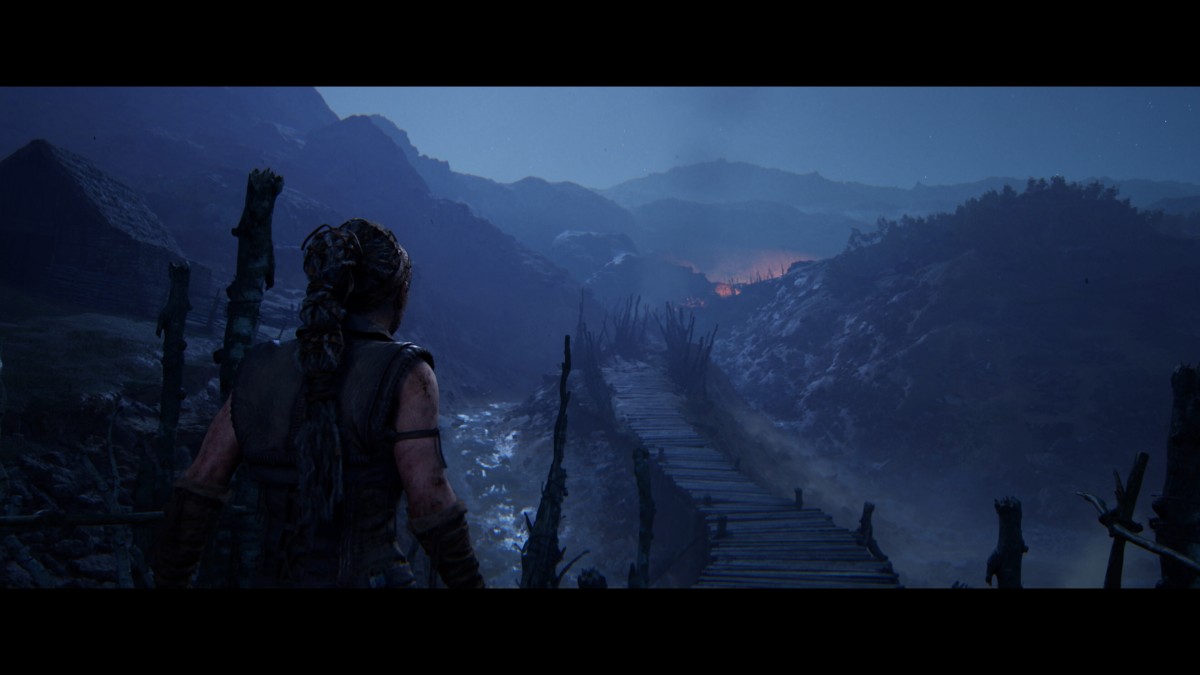
For
the
last
review
I’ll
cover
today,
let’s
jump
back
to
some
positive
vibes.
Marcus
Stewart
of
Game
Informer
slapped
the
game
with
an
impressive
9
out
of
10,
praising
getting
to
experience
a
Senua
that
has
accepted
her
psychosis,
where
the
voices
in
her
head
now
“factor
less
directly
into
gameplay
and
are
largely
used
as
an
effective
storytelling
flourish:
audible
manifestations
of
her
innermost
thoughts
and
anxieties.”
He
finished
the
review
by
saying:
“Senua’s
Saga:
Hellblade
II’s
conclusion
ends
on
another
strong
note,
and
despite
my
initial
reservations
about
continuing
Senua’s
story,
I
walked
away
happy
to
see
her
conquer
new
monsters,
both
literal
and
metaphorical.
I’m
pleased
Ninja
Theory
avoided
the
temptation
to
blow
up
this
formula
into
something
far
bigger
than
needed
–
this
isn’t
Xbox’s
God
of
War;
it’s
a
better
Hellblade.”
Clearly,
Senua’s
Saga:
Hellblade
2
is
a
slightly
divisive
game
among
critics,
but
the
overall
consensus
does
seem
good.
It’s
going
to
be
fascinating
to
see
what
the
general
audience
thinks
of
the
game
now
that
it
is
out,
especially
amidst
fears
that
the
lack
of
marketing
could
indicate
Microsoft
isn’t
investing
in
Ninja
Theory
as
much
as
they
once
did.
I
wrote
my
own
piece
on
these
fears,
but
there
is
some
potential
good
news
as
insiders
claim
Ninja
Theory’s
next
game
has
already
been
given
the
go-ahead
by
Xbox.