


I have known about Gunnar Optiks for years, and I’ve always been sceptical. The company’s entire business is built around glasses for people who spend far too much time staring at screens, promising everything from reduced eye strain and glare to less dryness and blue-light exposure. That’s a demographic I fit alarmingly well. I write for a living, play games for considerably longer than is sensible and then, because apparently I hate my retinas, usually relax by staring at another screen. Occasionally there’s a book involved, if I’m feeling generous to my eyeballs.
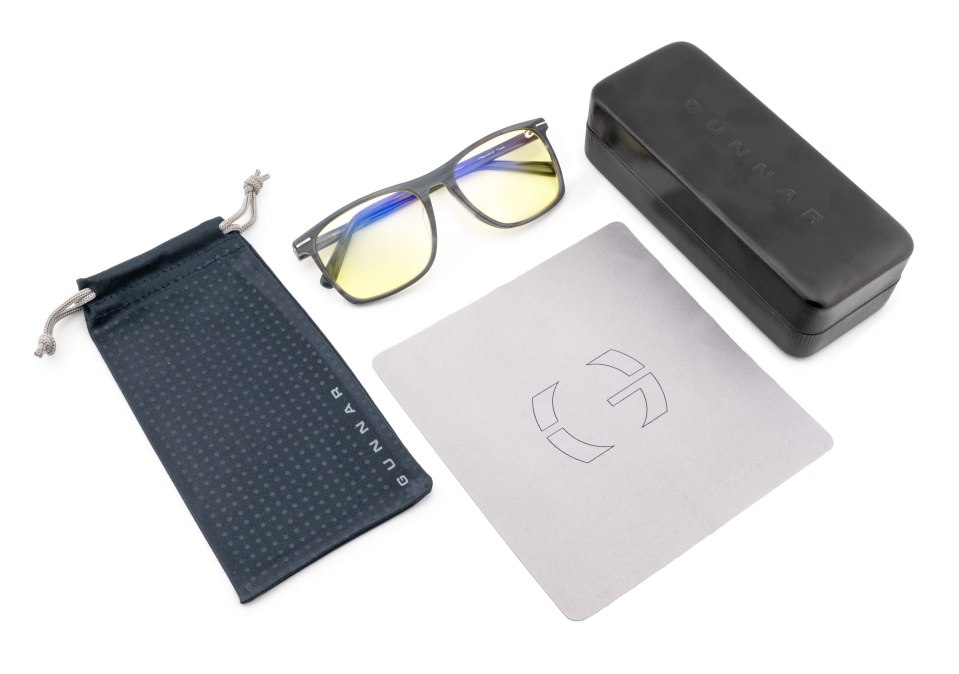
Image credit: Gunnar Optiks
There’s just one fairly major problem with reviewing them: screens don’t particularly bother me. I rarely get headaches or noticeable eye strain from using them, which makes me a pretty terrible test subject for something designed to alleviate exactly those things. Luckily, I wasn’t the only person trying Gunnar’s glasses, and that’s where this review became considerably more interesting. They did basically nothing for me, while someone else thought they made a substantial difference.
And the science isn’t particularly sure either.
So, do Gunnar glasses work? After considerably longer testing than I would care to admit, the irritating answer is: maybe. Brace yourself for a review that fails to do what a review should: give you a concrete answer.
Gunnar sent me all three members of its Trace Collection: the Barton, Davis and Hayward, each priced at $110. They’re chunky acetate frames fitted with Gunnar’s specialised lenses and coatings, with a slightly wrapped shape intended to provide plenty of eye coverage.
They’re also not especially my style. I already wear glasses and generally prefer frames that are as small and unobtrusive as possible, largely because I’m self-conscious enough about wearing the bloody things already. The Trace collection seemingly received the opposite design brief. They’re big, thick and quite happy to announce their presence on your face, although that starts making considerably more sense when you consider what Gunnar is trying to achieve. More lens means more coverage, and the shape is also part of Gunnar’s attempt to reduce airflow around the eye.
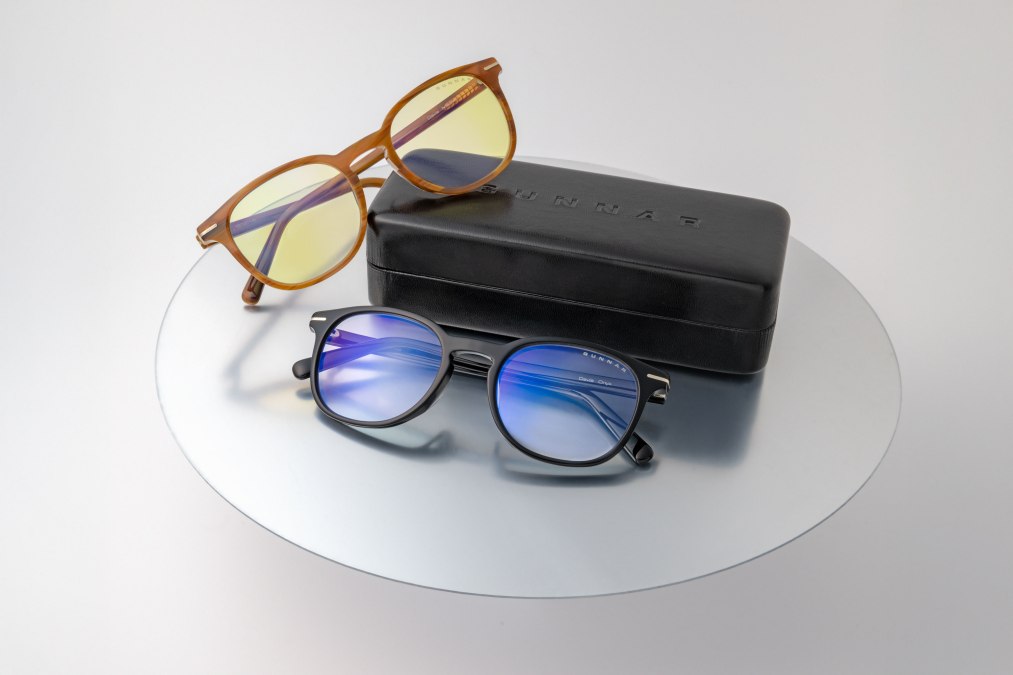
Image credit: Gunnar Optiks
The Barton is particularly enormous. Putting it on made me feel like I should be able to send an arrow through the eye of a mouse from a mile away. Sadly, my archery skills remained entirely unchanged.
Of the three, I preferred the Hayward. The grey finish suited me better and the shape felt a little less imposing, while the Davis has a rounder, slightly cat-eye look. That’s entirely personal taste, though. All three feel well put together, with sturdy frames, very little unwanted flex and reassuringly resistant hinges. My Barton has a small creak from its left hinge when I close it, but neither of the other two pairs does, so I’m inclined to blame that particular sample rather than declare an international creaking crisis.
Comfort has been good as well. There are no adjustable nose pads on these three models, so you’re ultimately relying on the frame shape fitting you, but none of the three created noticeable pressure around my nose or ears during use. The lenses themselves are even easier to praise because they’re genuinely excellent. They’re extremely clear, with none of the cheap distortion or softness I half-expected from tinted glasses, and that was something my other testers noticed independently as well.
They’re also remarkably easy to clean. One pair came back to me after a hard life outside its case, complete with dust and fingerprints, and the supplied microfiber cloth got them looking pristine again without much effort. My cheap Specsavers glasses usually respond to cleaning by relocating the smudge somewhere more irritating, so Gunnar wins that deeply prestigious comparison. The only thing I don’t like is the small Gunnar branding on the upper corner of the lens itself. Occasionally the light catches it just enough that I notice something in my peripheral vision, which is a wonderfully silly thing to add to glasses partly intended to reduce visual annoyance.
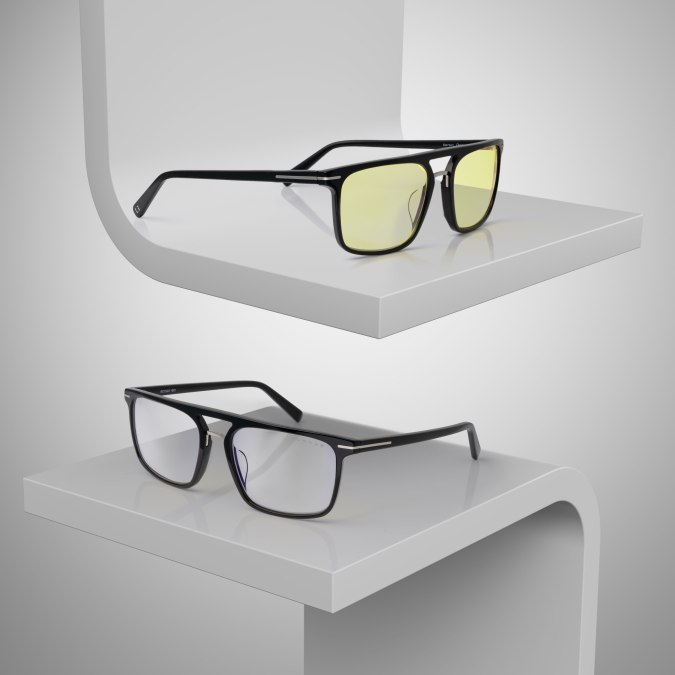
Image credit: Gunnar Optiks
Then there’s the tint, which was the part I expected to hate.
Before actually using Gunnar glasses properly, I’d always pictured them turning the world piss-yellow. In reality, it’s considerably subtler. On a predominantly white screen it doesn’t really look yellow. It looks like one of those bullshit shades of white that apparently has a name if you’re decorating a house. Somebody will confidently tell you that you’re looking at Warm Ivory, Soft Porcelain and Winter Whisper while you’re standing there thinking they’re all just fucking white.
Colourful games make the change much easier to spot. I tested them with a game I’m reviewing called Mexican Ninja, which created the beautiful situation where a game set in Mexico had commendably resisted the ancient movie and videogame tradition of slapping a yellow filter over the entire country, only for my glasses to step in and do the job instead.
Reds became warmer and sometimes more vibrant, oranges became more pronounced, cooler colours lost some of their blue and skin tones visibly changed. Constantly moving the glasses up and down my nose made the difference extremely obvious, but that also turned out to be a fairly artificial way of testing them. Once I stopped behaving like an optician having some sort of breakdown and simply played the game, I got used to the tint remarkably quickly. After 20 or 30 minutes in a dark room, I’d mostly stopped noticing it. Taking them off suddenly made the screen seem brighter and cooler for a moment, but no more dramatically than I’d expect after my eyes had adjusted to something slightly darker.

Image credit: Gunnar Optiks
I still wouldn’t use Gunnar’s Amber lenses for colour-critical work. If you’re editing photographs, grading video or doing anything where getting a shade precisely right matters, deliberately changing the colour balance of the display is obviously less than ideal. Gunnar generally offers clearer lens options for exactly that reason at no extra cost, but those block less blue light. Gunnar claims the Amber lenses block 65% of blue light at 450nm, whereas Clear blocks out 35%. Clear Pro is for accurate colour reproduction, only stopping 20% of the blue light from ambling into your eyeballs.
For ordinary gaming, though, the Amber tint proved far less intrusive than I’d expected.
That leaves the considerably more difficult question of whether any of this actually makes your eyes feel better.
Gunnar is extremely confident that its glasses can help with eye strain. The science, unfortunately for Gunnar, is considerably less enthusiastic. In fairness, though, it isn’t exactly extensive either, and there’s an important distinction here that often gets lost when people discuss “blue-light glasses”: filtering blue light is only one part of what Gunnar claims its glasses are doing.
A major Cochrane review published in 2023 looked at 17 randomised controlled trials involving 619 people and found that blue-light-filtering lenses may provide little or no short-term benefit for computer-related eye strain compared with ordinary lenses. That’s the strongest independent evidence available and obviously isn’t much of an endorsement for one of the most heavily marketed parts of products like these. At the same time, the studies were generally small and short, the overall evidence was limited, and the researchers explicitly called for better trials.
More importantly for this review, that research was looking at blue-light filtering rather than testing Gunnar’s complete design. Gunnar combines the tint with anti-reflective coatings, a slight +0.2 focusing power intended to make close-up work easier on the eyes, and a high-wrap frame that the company says helps reduce airflow and retain humidity around the eye. The basic ideas aren’t pulled from thin air. Reducing reflections is, well, what an anti-reflective coating does, while small studies of much more enclosed moisture-chamber glasses have found improvements in dry-eye comfort and tear stability. Research into dedicated computer and focusing lenses has produced some potentially positive short-term results too, although the quality of that evidence is poor and long-term benefits remain uncertain.
None of that proves Gunnar’s particular combination works. That’s the important bit. There simply hasn’t been enough strong independent research into the whole package for me to point at a study and declare the matter settled either way. The blue-light part has been studied most heavily and doesn’t come out looking particularly impressive; some of Gunnar’s other ideas are plausible, but plausible and proven are two very different things.

Image credit: Gunnar Optiks
Which rather neatly mirrors my own testing.
I noticed no meaningful improvement whatsoever. But there wasn’t much to improve. I can sit in front of a monitor for stupid lengths of time without suffering notable headaches or eye strain, and putting Gunnar glasses on didn’t suddenly make my eyes feel fresher, stronger or capable of seeing through walls. They felt much the same as they did beforehand.
My sister-in-law made for a far more useful guinea pig. She suffers from migraines accompanied by photosensitivity and sometimes photophobia, and already relies on the night-light settings on her phone and computer because warmer displays are easier for her to tolerate. Her experience with Gunnar was dramatically different from mine: she felt the glasses made a substantial difference, including during migraines, and specifically said they worked better for her than simply changing the colour temperature of her screens.
She also found them useful against ambient light rather than just whatever was coming from the monitor, and praised the clarity of the lenses. At the same time, her experience wasn’t some glowing testimonial written by Gunnar’s marketing department. She wished the glasses enclosed her eyes more completely to cut out light arriving from above, below and around the sides, and despite finding them useful, she still questioned the price.
That’s important because her result doesn’t prove Gunnar glasses treat migraines, just as mine doesn’t prove they’re useless. Migraine-related light sensitivity is also a different beast from ordinary computer eye strain, and there has been some research suggesting particular tints can help certain migraine sufferers. Again, though, that’s not the same thing as proving Gunnar’s Amber lenses are a migraine treatment.
Another test subject was my brother, a mad tech genius who has worked high up in various tech firms around the world. He spends almost all day looking at screens. Unfortunately, like me, he doesn’t tend to suffer any side effects. He also found them comfortable, didn’t have any issues with the tint and didn’t see any improvements. However, he also knows someone who has been using Gunnar glasses for around a decade who swears by them.
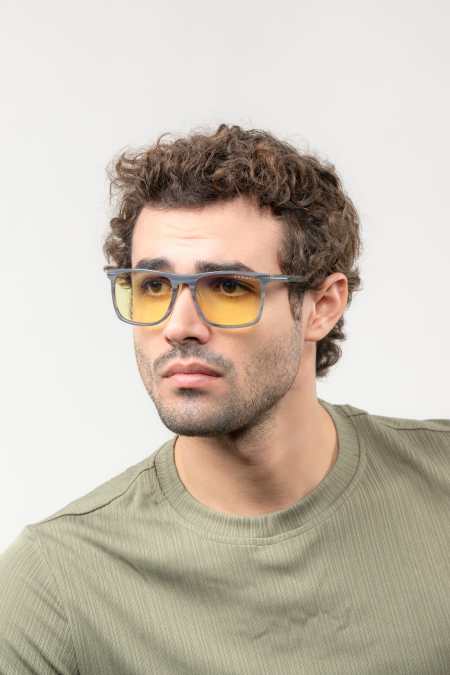
Image credit: Gunnar Optiks
And none of this can address another mystery factor: prevention. I don’t suffer any obvious ill effects from spending huge amounts of time looking at screens now, but could something like Gunnar stop problems developing later? Fuck knows. That’s the sort of question that would need proper long-term research, and I’m a games reviewer, not a scientist.
All of which leaves us with pricing, where the argument gets interesting. At $110 for a standard Trace pair, Gunnar isn’t cheap, but I don’t think the price is ludicrous purely as a pair of glasses. The frames feel substantial and the lenses are excellent, and once you convert that into roughly what I’d expect to spend replacing an ordinary pair of glasses here in the UK, the number isn’t completely outlandish.
Prescription lenses change the equation considerably. Adding them currently costs another $100, which pushes a $110 Trace frame to around $210. That’s a much bigger ask, especially for a product where the benefit is this difficult to predict. Prescription orders also come with more restrictive return conditions, so somebody buying Gunnar specifically in the hope of easing headaches or eye strain is making a considerably larger commitment than the headline $110 suggests.
That’s ultimately why I wouldn’t recommend buying a pair simply because you’ve heard that blue light is quietly murdering your eyeballs. If you already sit in front of a monitor for hours without discomfort, I’m struggling to see what problem you’re spending the money to solve. Take breaks, make sure your prescription is correct, sort out terrible room lighting and don’t sit six inches from a display like Gollum guarding the world’s brightest ring.
If you want to buy them as a preventative treatment so that you can continue to suntan your eyeballs via the power of screens, that’s a whole other question with no answers.
If screens or bright light genuinely make you uncomfortable, the argument gets much more interesting. My sister-in-law’s experience, along with plenty of similar accounts from other users, is enough that I certainly can’t dismiss Gunnar as expensive gamer snake oil like I once did. The glasses themselves are also good enough that I have very few complaints about them as optical products. What I can’t do is promise that any of Gunnar’s various tricks will make a meaningful difference to you.
That’s an annoyingly imprecise verdict after all this, but perhaps it’s the only sensible one. I can’t pretend my own experience was more positive than it was, ignore the limitations of the science, or hype up Gunnar’s claims beyond what the evidence supports. Nor can I dismiss first-hand accounts from a lot of satisfied people who can go to work every day in an office without feeling like they’re staring straight into a torture device.
Gunnar makes a very good pair of glasses. Whether they’ll actually make you feel any better is considerably harder to focus on.
Sorry. Had to get one more glasses joke in.